Blog
Eight Notable U.S. Stamp Rarity Cases and Their Evidence


This is a group of eight rarity case studies, not a definitive ranking of the eight rarest USPS stamps. Different items are rare for different reasons, and comparable surviving-population data do not exist for every entry.
Use one measure at a time
Production quantity, discovered quantity, verified surviving examples, condition rarity, and market availability are different measures. A clear rarity description names the measure being used.
For the Upright Jenny variety, USPS intentionally produced 100 panes containing six stamps each. That production figure should not be confused with the number discovered, reported, or currently surviving.
Eight case studies
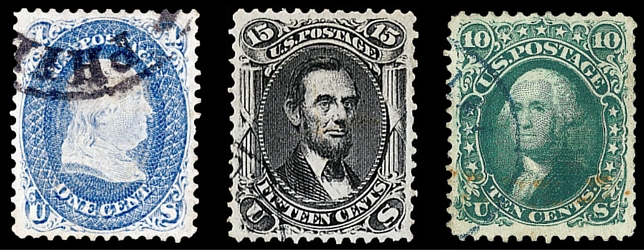
1. 1868 one-cent Z Grill: two examples are documented, making the census itself the important rarity measure.
2. 1868 fifteen-cent Z Grill: rarity depends on correctly identifying the grill, denomination, and certified variety, not merely seeing an embossed area.
3. 1869 twenty-four-cent inverted center: this bicolored issue must be examined to determine which printed element is inverted in relation to the other.
4. 1901 two-cent Pan-American invert: the black train vignette is inverted within the carmine frame; certification and condition remain essential.
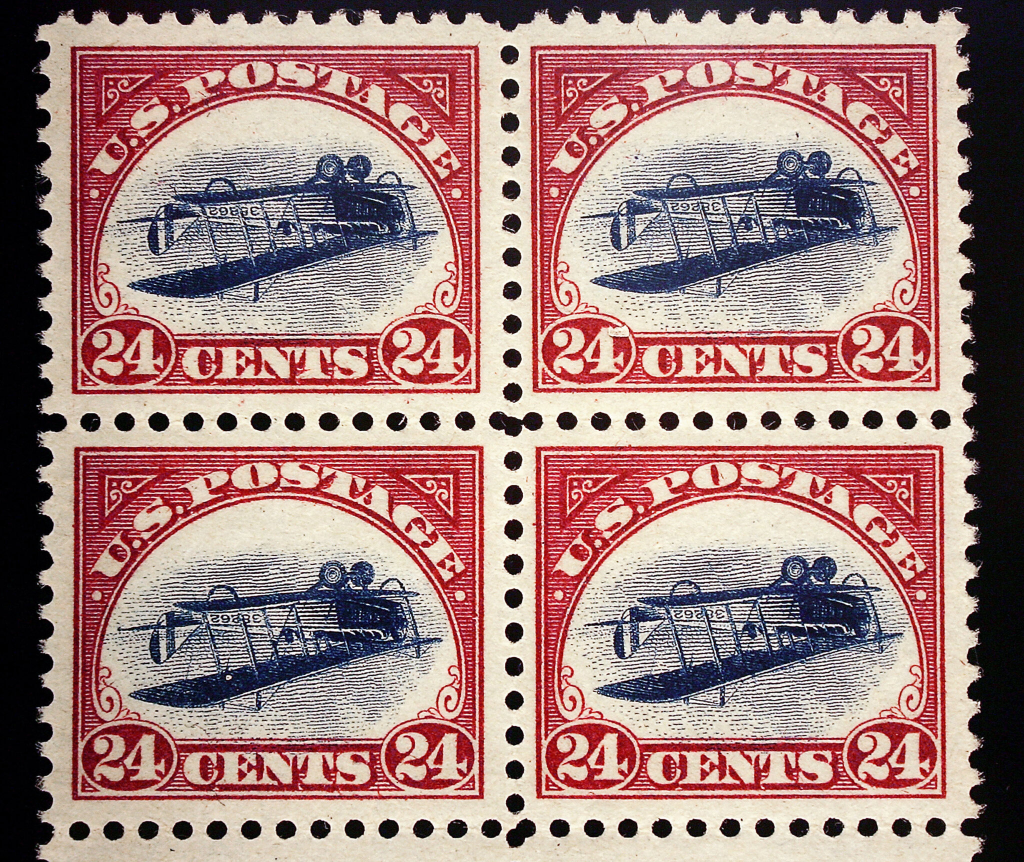
5. 1918 twenty-four-cent Inverted Jenny: the discovery pane contained 100 stamps, and individual positions can be traced through plating and provenance.
6. 1979 CIA invert: the one-dollar Rush Lamp and Candle Holder error is identified through the omitted/inverted color relationship, pane position, and provenance.
7. 2013 Upright Jenny: USPS intentionally produced 100 six-stamp upright panes, so this is a deliberately created modern rarity rather than an accidental printing error.
8. Alexandria “Blue Boy” provisional: the recorded object is a unique surviving cover postmarked November 25, 1847, not simply a loose blue stamp.
These cases mix errors, varieties, provisionals, and deliberate modern rarities, so they are examples rather than a single numerical ranking.
Prices need complete context
Every price example must identify the exact variety, denomination, format, gum or used status, grade, faults, certification, sale venue, and sale date. Asking prices are not completed transactions.
Past auction results do not establish stable growth, best investment potential, or guaranteed future value.
Evidence behind the eight examples
| Case | Rarity measure used here | Minimum record to verify |
|---|---|---|
| 1-cent Z Grill | Two documented examples | Named census, certificate, and provenance |
| 15-cent Z Grill | Certified variety population | Grill type, catalog identity, and certificate |
| 24-cent 1869 invert | Verified surviving error examples | Certificate, provenance, and dated sale record |
| 2-cent Pan-American invert | Verified accidental inverts | Type, condition, certificate, and provenance |
| 1918 Inverted Jenny | One discovered pane of 100 | Position number, certificate, and ownership history |
| CIA invert | Documented error pane and positions | Pane position, certificate, and provenance |
| 2013 Upright Jenny | 100 intentionally produced panes of six | USPS production notice and intact-pane format |
| Alexandria Blue Boy | One recorded surviving cover | Entire-cover provenance and expert record |
The evidence column is not a second ranking. It shows why a bare adjective such as “rare” is insufficient and what documentation must accompany each different kind of claim. A dated auction result can document one transaction, but it cannot establish a permanent market value.
How to read the rarity evidence
This is an eight-case identification guide, not a market ranking or a single-date census. Production totals, surviving examples, certification populations, and sale prices answer different questions and can change at different times. Any population or price quoted for a particular stamp should therefore carry its own source and date.
For search and comparison, use the exact issue name plus denomination, year, variety, format, and certificate number where available. That query is more reliable than searching only for “rarest U.S. stamp,” because it connects the reader to records about the same object rather than to another author’s ranking.
Sources
Key facts were checked against National Postal Museum: 1-cent Z Grill; National Postal Museum: 1869 Pictorial issues; National Postal Museum: 2-cent Pan-American train invert; National Postal Museum: Inverted Jenny; the National Postal Museum CIA-invert object record; the museum’s Z Grill, 1869 invert, Blue Boy, and CIA-invert discussion; and the USPS Upright Jenny production notice. These links document identifiable objects or production records; case-specific certification and current census records should still be consulted before quoting a population or price.