Blog
How Much Are My Stamps Worth? A Valuation Guide

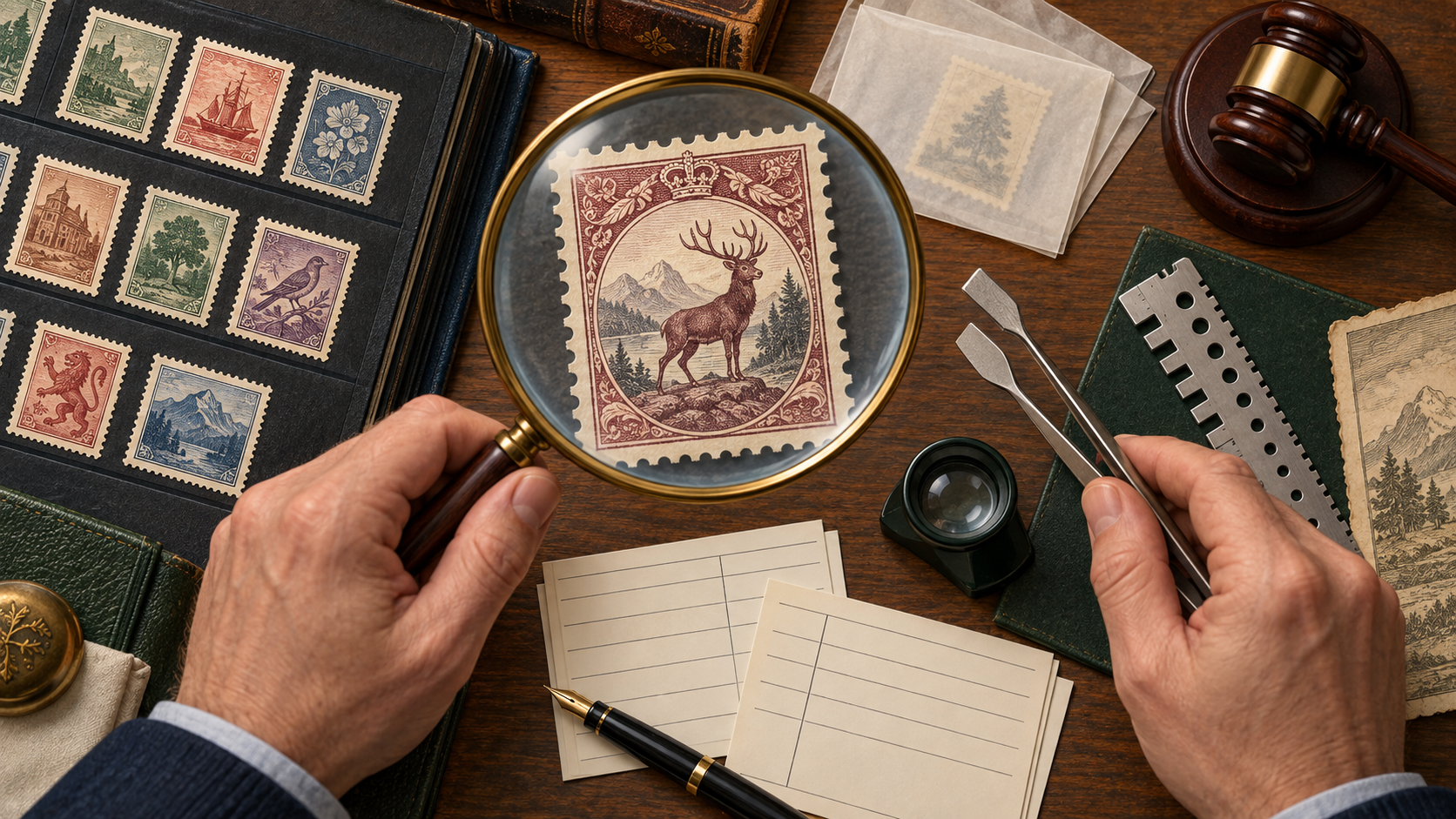
A stamp’s market value cannot be determined from age, subject or face value alone. Identify the exact object, evaluate authenticity and condition, then compare real transactions for the same variety and state. Without clear images and measurements, a responsible answer is a research path—not a dollar figure.
Record the identity first
| Field | Why it matters |
|---|---|
| Issuing country or authority | Similar designs and currencies occur in different postal systems and periods |
| Year, denomination and catalog number | Separates a general design from a specific issue |
| Perforation, watermark, paper and printing | Can distinguish common and scarce varieties |
| Gum, hinge, cancel and centering | Defines state and affects the valid comparable set |
| Faults, repairs and certificates | Changes both confidence and marketability |
| Object type and provenance | A cover, block, plate piece or single stamp may have different significance |
Separate four meanings of “value”
- Postage value: what valid unused postage contributes to a mailpiece.
- Catalog value: a standardized reference under the catalog publisher’s stated condition assumptions.
- Asking price: what a seller requests; it is not proof of a sale.
- Realizable net value: likely proceeds after commission, fees, insurance, shipping and other selling costs.
Insurance replacement value, estate fair-market value and a dealer’s purchase offer can also differ because they answer different questions on different dates.
Build a comparable-sales set
- Find completed sales for the same issuing authority, cataloged variety and object type.
- Match condition: unused versus used, gum, centering, cancellation, faults and certificate status.
- Record transaction date, currency, auction house or platform, and whether the result is hammer price or includes buyer’s premium.
- Reject unsold lots and unrelated look-alikes. Use several credible observations where possible.
- Estimate net proceeds only after subtracting the seller’s likely costs.
A photo-recognition tool can suggest candidates but cannot see every watermark, repair, regum, reperforation or expert opinion. Do not clean, soak or alter the item to make identification easier.
United States and Great Britain examples
For a U.S. stamp, use the appropriate U.S. catalog reference and verify denomination, issue, perforation, grill or printing variety and gum or cancel. For Great Britain, a Stanley Gibbons number may be the market’s working identifier; record the catalog edition, pound-denominated reference and the currency and venue of each actual sale. Never treat numbers from different catalogs as interchangeable.
Revenue stamps and items marked “postage & revenue” require another step: identify whether the object paid postage, tax, or had dual legal use in that country and period. A tax cancellation and a postal cancellation are not the same evidence, and an intact document may be valued differently from a detached stamp.
When to seek professional help
Consider expertizing when a variety is frequently forged or altered, or when the potential value justifies the fee. For estate, tax, insurance or litigation purposes, ask for a qualified appraisal with a written scope, effective date, selected market and conflict disclosure. A dealer’s offer is not automatically an independent appraisal.
Use our dealer and appraiser checklist, review representative records in most valuable postage stamps, or return to the stamp collecting center. This site does not authenticate, appraise or buy collections.
Valuation method reviewed September 12, 2026. Market prices change, and each physical object requires its own examination.