Blog
Vintage U.S. Postage Stamps: Identification and Buying Guide

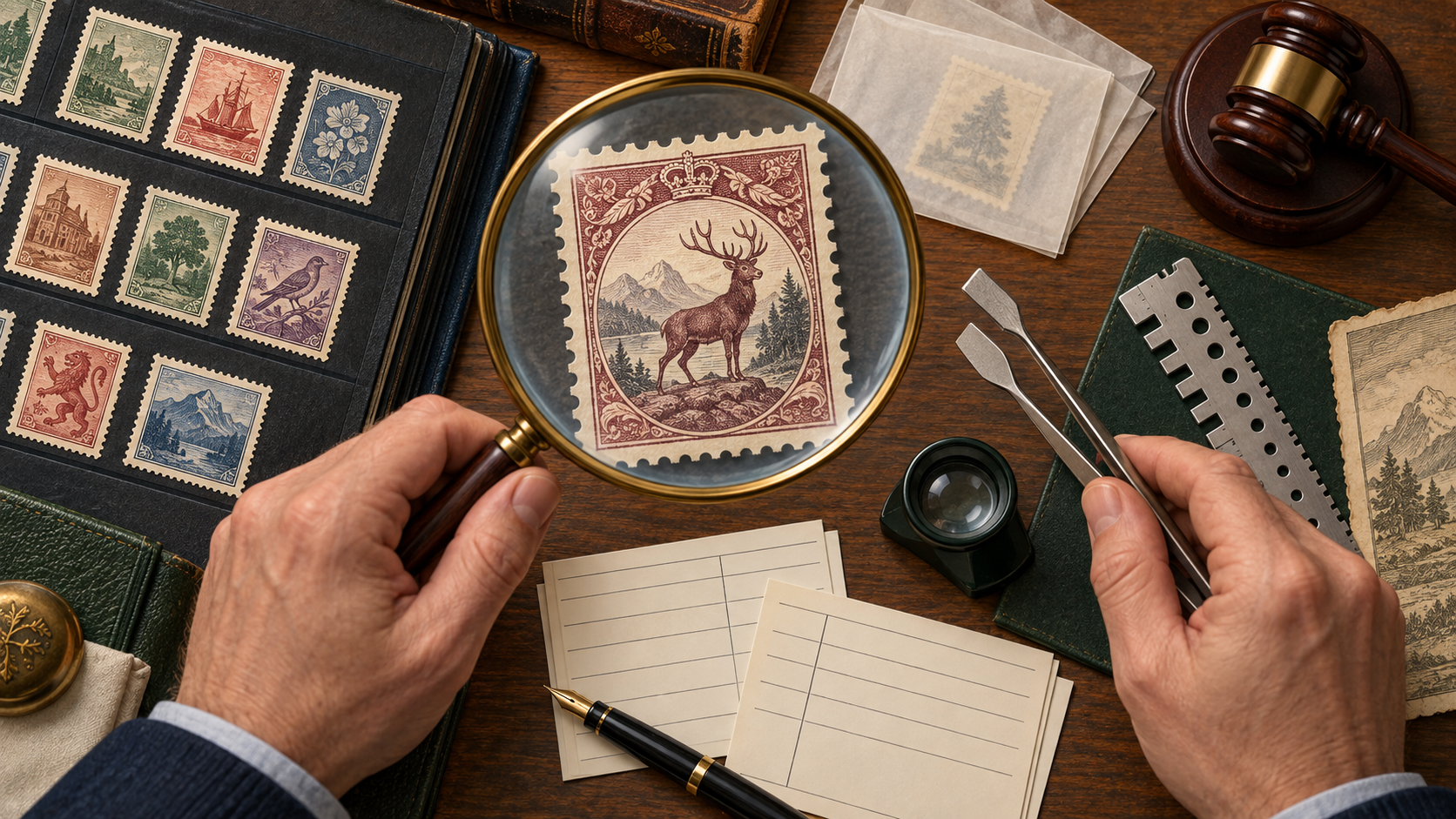
Older U.S. stamps can be valid postage, collectible objects, or both. Identification begins with the issuing country, denomination or rate inscription, design, issue date, format, and condition. “Vintage” is a broad sales term, not a USPS postage category, catalog class, or guarantee of rarity.
Face value and rate-category value
A stamp with a printed denomination contributes exactly that amount when used. A nondenominated Forever stamp follows the First-Class Mail one-ounce price, while a stamp marked “Two Ounce” follows the applicable two-ounce letter price. That distinction matters more than the age or decorative subject of the stamp.
Unused U.S. postage generally does not expire, but the sender must still meet the current price and mailing standards. Weight, shape, rigidity, thickness, mail class, and destination can require additional postage.
A systematic identification workflow
- Read every inscription. Record “USA,” a printed denomination, a rate label such as “Forever” or “Two Ounce,” a person or subject name, and any year printed in the design.
- Match the design to an issue record. Compare the portrait, object, colors, lettering, orientation, and visible format with a USPS announcement, museum record, or named stamp catalog. A copyright year in the design may differ from the issue year.
- Identify the format. A sheet stamp, booklet stamp, coil stamp, self-adhesive pane, imperforate press sheet, postal stationery item, and first-day cover are not interchangeable. Straight edges, die cuts, backing paper, plate numbers, and adjacent stamps can help establish format.
- Examine production characteristics. Perforation gauge, die-cut pattern, watermark, paper, tagging, gum, printing method, and plate markings may separate similar issues. Use only characteristics documented for the specific issue; one feature alone is not a universal authenticity test.
- Record condition and provenance. Note whether the stamp is unused or canceled and whether it has original gum, bends, tears, thins, stains, fading, missing perforations, hinge marks, or disturbed adhesive. For a costly item, preserve invoices, certificates, and prior ownership records.
Dates, catalog numbers, and look-alike stamps
A catalog number is meaningful only when the catalog system is named. USPS item numbers identify retail products, while Scott and other philatelic catalogs use their own numbering systems. Do not label a Scott number as a USPS product number.
Closely related designs may have different denominations, inscriptions, formats, or issue dates. Search with a combination such as subject, denomination or rate label, format, and approximate year. Confirm the result against a record that shows the same design and technical characteristics rather than relying on an image-search resemblance.
Vintage Tulip and Yes, I Do
USPS first issued the engraved Vintage Tulip as a 70-cent stamp on February 14, 2015. On June 1, 2015, it reissued the design as a nondenominated Two Ounce stamp with an initial price of 71 cents. The later stamp is identified by the words “Two Ounce,” not by a permanently fixed 71-cent value.
USPS also reissued Yes, I Do on June 1, 2015, as a nondenominated Two Ounce stamp initially priced at 71 cents. Its floral heart design carries the words “Two Ounce.” Both nondenominated versions remain valid for the price category printed on them at the time of use; they are not ordinary one-ounce Forever stamps.
| Feature | Vintage Tulip, February 2015 | Vintage Tulip, June 2015 |
|---|---|---|
| Inscription | Printed “70¢” | Printed “Two Ounce”; no fixed cent value |
| Postal value | Exactly 70 cents | Current Two Ounce letter-rate category |
| Initial issue context | February 14, 2015 fixed-denomination issue | June 1, 2015 reissue, initially sold for 71 cents |
These two issues illustrate why an original sale price and current postal value must be separated. “71 cents” describes their initial price in 2015; “Two Ounce” describes the rate category that determines their value when used later.
Using the comparison when buying
If a seller calls a loose stamp a “71-cent Vintage Tulip,” use the table’s inscription row before relying on that label. Then match the exact design and format to the USPS announcement. Condition and any collectible premium are separate questions from its postal value.
Condition and buying checks
Apply the workflow above to the exact item offered. Compare it with a named catalog or USPS issue record, identify the seller, review return terms, and use completed transactions rather than asking prices when discussing market value. Color, tagging, microprinting, or paper characteristics can assist examination, but no single visible feature guarantees authenticity.
Before paying a premium, ask what fact creates the premium: a scarce variety, unusual format, high grade, expert certificate, postal history, or documented provenance. Age, a decorative subject, and the word “vintage” are not enough. Valuable or disputed material should be examined by a qualified philatelic expert.
Sources
Key facts were checked against USPS Stamp Announcement 15-26: Vintage Tulip, USPS Stamp Announcement 15-25: Yes, I Do, the USPS Domestic Mail Manual section 604 governing stamp validity and postage value, and the USPS history of stamps and Forever stamps.