Blog
Luna Moth USPS Stamp Guide

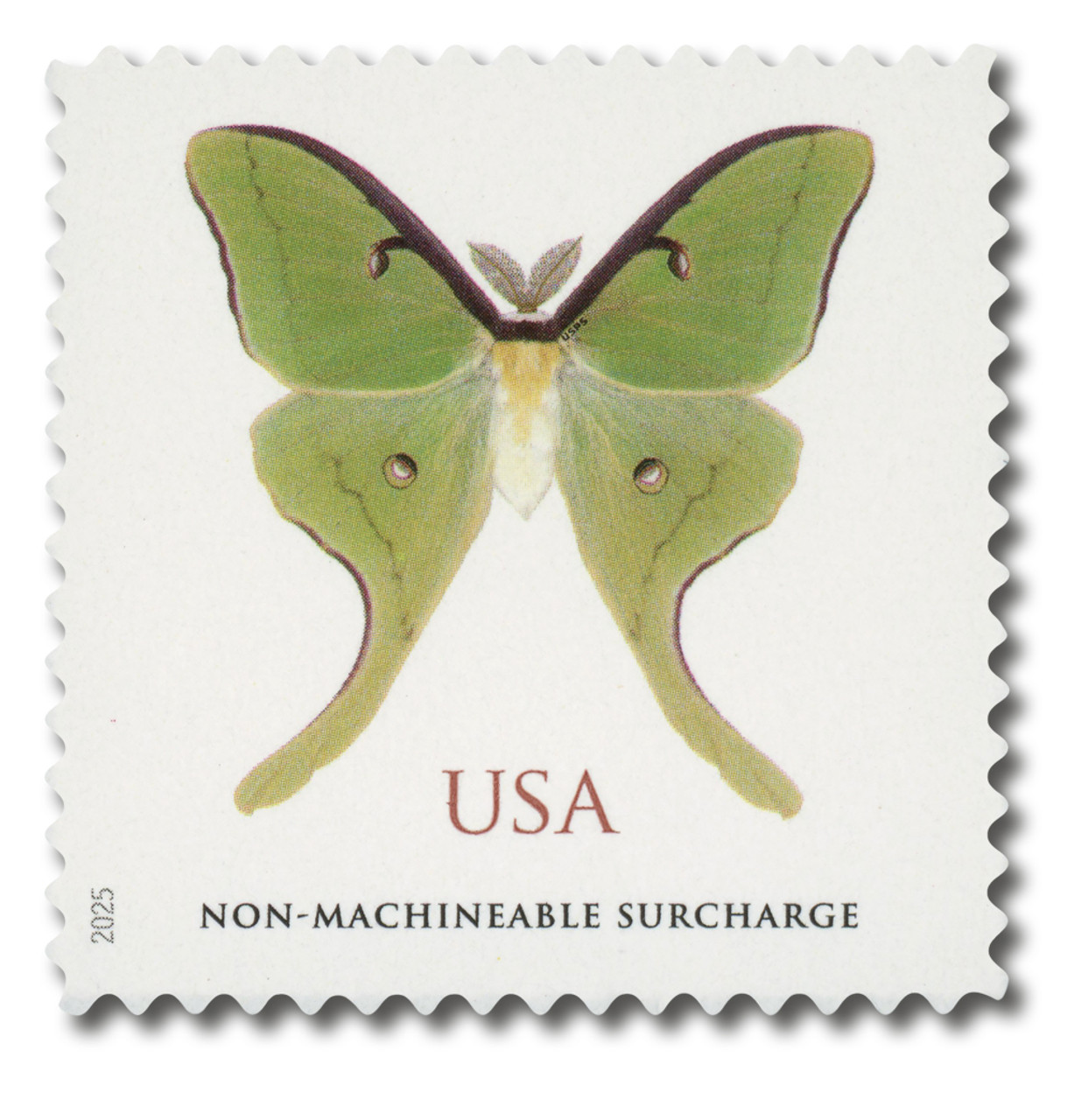
The Luna Moth stamp belongs to the U.S. Postal Service tradition of butterfly designs associated with nonmachinable First-Class Mail. This guide separates the stamp’s postal purpose from its artwork and from the living species it depicts.
What the stamp is
USPS issued the nondenominated Luna Moth Non-machineable Surcharge stamp on August 16, 2025, in Schaumburg, Illinois. The words “NON-MACHINEABLE SURCHARGE” identify its rate category rather than a fixed denomination. It was sold in panes of 20 as USPS Item 124300.
A philatelic catalog number, if quoted, should name the catalog that assigned it; USPS Item 124300 identifies the retail pane.
How to use it correctly
For a qualifying domestic one-ounce nonmachinable First-Class Mail letter, one unused Luna Moth stamp pays the named rate category. It does not cover every padded, overweight, oversize, or parcel-shaped piece. Mailing date, destination, weight, dimensions, thickness, rigidity, and uniformity still determine whether another charge or classification applies.
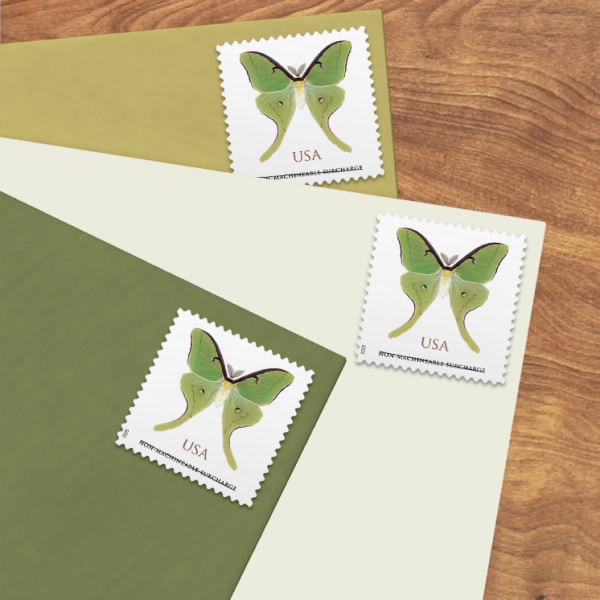
A square invitation is one common use, but a bulky wax seal or several inserts can change both machinability and weight. Check the completed piece rather than an empty sample; if its classification is uncertain, have it measured and weighed at a Post Office before preparing the full mailing.
For a dated example, prices effective July 12, 2026, make a qualifying one-ounce nonmachinable domestic letter $1.31: the 82-cent one-ounce letter price plus the 49-cent nonmachinable surcharge. One unused Luna Moth stamp covers that named category. If the same finished invitation weighs 1.3 ounces, the 29-cent additional-ounce amount raises the total to $1.60, so another 29 cents is required. These figures are an example tied to that date; dimensions, thickness, rigidity, destination, and the price in effect on the actual mailing date still control.
About the Luna Moth
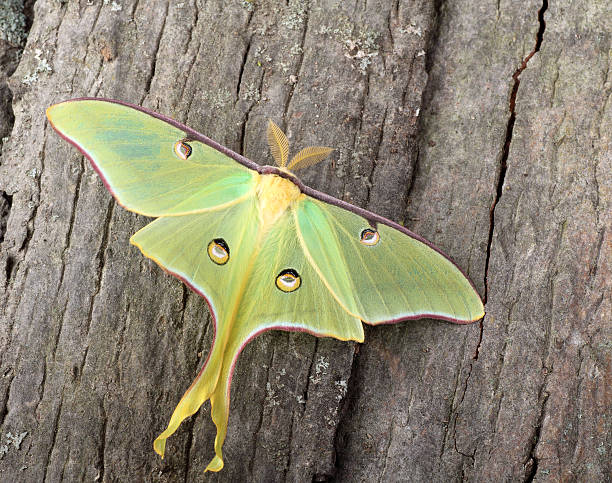
The luna moth (Actias luna) is a North American moth, not a butterfly. Adults are known for pale green wings, eyespots, and long tails on the hind wings.
Derry Noyes served as art director and designer, using Joseph Scheer’s moth image. The square crop makes the pale green body, four eyespots, fine wing texture, and sweeping hind-wing tails the principal identification cues. Those tails and the moth’s broader form distinguish the design from the compact butterfly silhouettes used on earlier surcharge stamps; USPS produced the issue by offset and flexographic printing.
Collecting and authenticity
For identification, first compare the square format, the “NON-MACHINEABLE SURCHARGE” inscription, pane layout, and Joseph Scheer moth image with the USPS announcement. Secondary production traits can support that comparison but do not replace the issue-level match; valuable material may warrant qualified philatelic examination.
Sources
Key facts were checked against USPS Stamp Announcement 25-28; USPS domestic mailing standards; Smithsonian National Postal Museum.