Blog
Eastern Tiger Swallowtail USPS Stamp: History, State Insect & Usage


The Eastern Tiger Swallowtail stamp belongs to the U.S. Postal Service tradition of butterfly designs associated with nonmachinable First-Class Mail. This guide separates the stamp’s postal purpose from its artwork and from the living species it depicts.
What the stamp is
USPS issued this nondenominated Non-machineable Surcharge Rate stamp on June 1, 2015, in Kansas City, Missouri. Earlier butterfly designs from 2010 through 2014 printed fixed cent values; this 2015 issue instead carries the named rate category. It was initially priced at 71 cents and sold in panes of 20 as Item 117800. USPS stated that, like a Forever stamp, it remains valid for the rate category printed on it; it is not an ordinary one-ounce Forever stamp.
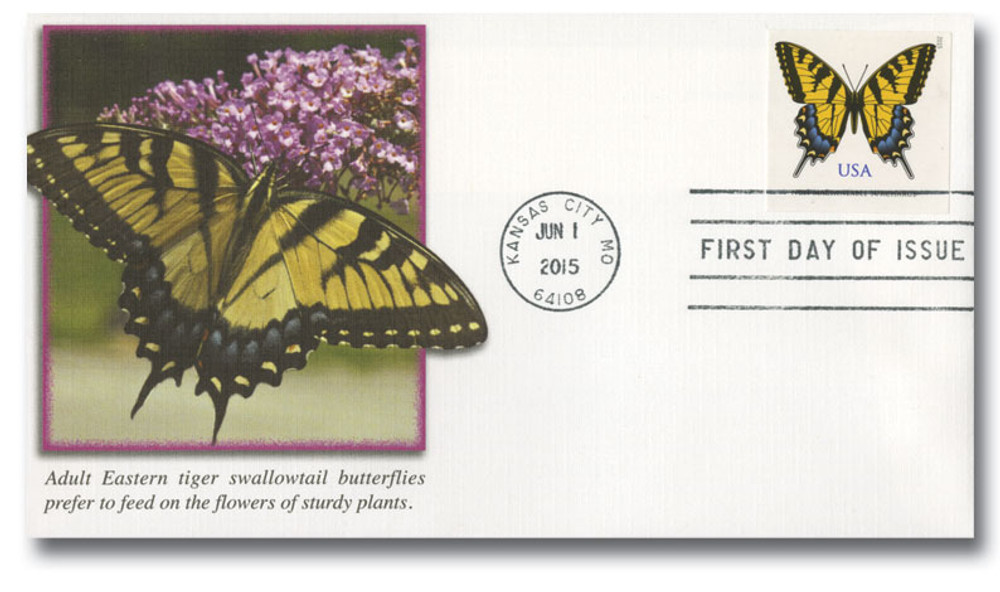
Item 117800 is the USPS retail identifier for the pane of 20. If a Scott or another catalog number is added, the catalog must be named so that a collector reference is not mistaken for the Postal Service order number.
How to use it correctly
For a qualifying letter, the stamp follows its printed Non-machineable Surcharge category. Destination, completed weight, dimensions, thickness, rigidity, and other standards still determine whether additional postage or a different mail classification applies.
Square invitations were an intended use, but a completed piece must still remain within First-Class Mail letter standards. Test the actual invitation with all inserts and decorations; an unusually thick, rigid, or uneven piece may need more than the rate category represented by this one stamp.
For example, at prices effective July 12, 2026, a qualifying one-ounce nonmachinable domestic letter totals $1.31: 82 cents for the one-ounce letter plus a 49-cent surcharge. The Eastern Tiger Swallowtail follows that category. A 1.3-ounce piece needs the additional 29-cent amount, and a piece outside letter standards requires a separate classification rather than another assumption based on the butterfly image.
The 2010 Monarch, 2012 Baltimore Checkerspot, 2013 Spicebush Swallowtail, and 2014 Great Spangled Fritillary illustrate the earlier fixed-value approach. The Eastern Tiger Swallowtail is the transition point in this practical chronology.
About the Eastern Tiger Swallowtail
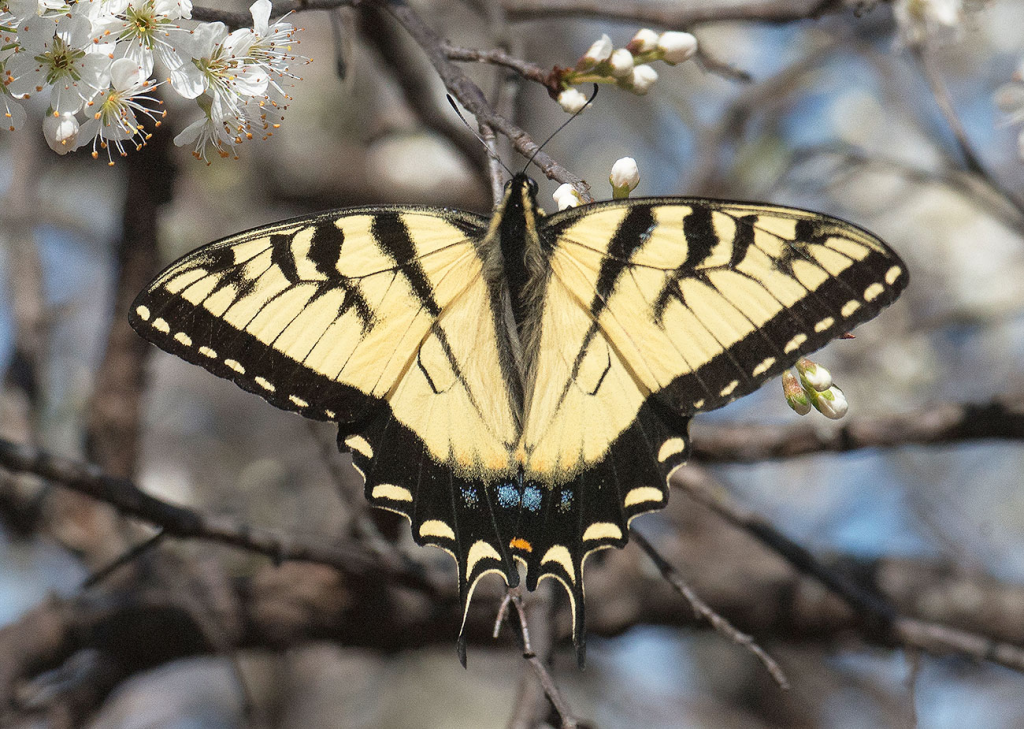
The Eastern Tiger Swallowtail is named for the dark tiger-like stripes on its yellow upper wings and occurs widely in eastern North America. Virginia designated the tiger swallowtail as its official state insect in 1991. Delaware, Georgia, and South Carolina recognize it as a state butterfly, so those designations should not be confused with Virginia’s state-insect title.
Tom Engeman created the colorful stylized butterfly, and Derry Noyes served as designer and art director. The yellow wings, black stripes, blue and orange hind-wing markings, and square format make the design readily identifiable.
Collecting and authenticity
For identification, use the yellow wings with black tiger stripes, blue and orange hind-wing markings, rate inscription, and pane format together. Production traits can support a comparison with the USPS announcement, but no color, die cut, tagging response, or microprinted detail proves authenticity by itself.
Sources
Key facts were checked against USPS Stamp Announcement 15-27; the Virginia Department of Wildlife Resources account of the state insect and its habitat; USPS domestic mailing standards; and the Smithsonian National Postal Museum.